
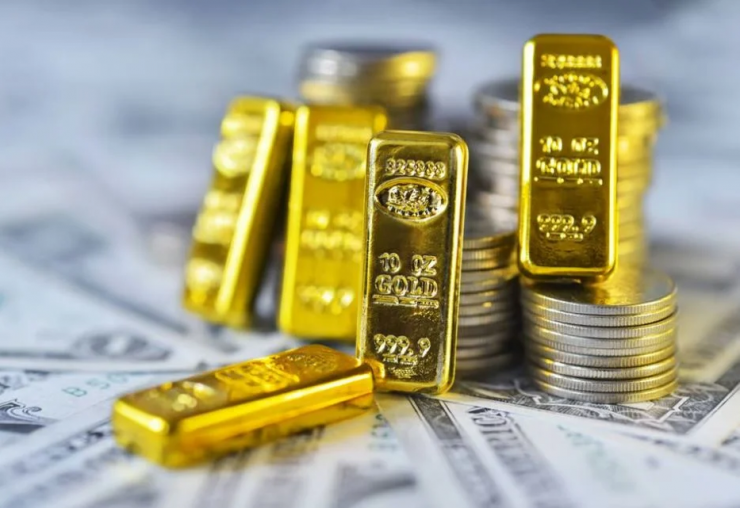
Gold Price Forecast to Hit $6,000: Bank of America’s Bold Outlook for 2026
A Bullish Prediction That’s Shaking Global Markets . In a world increasingly defined by economic uncertainty, inflationary pressure, and geopolitical instability, gold has once again taken center stage as a safe-haven asset. In its latest report, Bank of America has reaffirmed its bold forecast that gold prices could surge to $6,000 per ounce within the next 12 months.
This projection has captured widespread attention among investors, analysts, and policymakers alike. While some market participants view the estimate as aggressive, others see it as a realistic reflection of ongoing macroeconomic risks. Either way, the forecast signals a strong vote of confidence in gold’s long-term value.
Table of Contents
ToggleShort-Term Volatility vs Long-Term Strength
Despite its optimistic outlook, Bank of America acknowledges that gold may face short-term headwinds. Currently, gold prices hover around $4,600 per ounce, experiencing slight downward pressure due to elevated interest rates and a cautious monetary environment.
One of the primary factors influencing gold in the short term is the policy stance of the Cục Dự trữ Liên bang Mỹ. With inflation remaining persistent, the Fed is expected to maintain higher interest rates for longer, reducing the immediate appeal of non-yielding assets like gold.
However, this short-term weakness does not overshadow the broader picture. Over the long run, gold’s fundamentals remain strong, supported by structural economic imbalances and growing global uncertainty.

Inflation and the Weakening U.S. Dollar
A key pillar behind Bank of America’s bullish stance is persistent inflation. Rising oil prices continue to push up production and transportation costs worldwide, reinforcing inflationary trends that central banks struggle to control.
At the same time, concerns over the U.S. fiscal deficit and debt levels are putting pressure on the U.S. dollar. As the dollar weakens, gold becomes more attractive to investors seeking to preserve purchasing power.
Historically, gold has maintained an inverse relationship with the dollar. When confidence in fiat currencies declines, demand for gold typically rises. This dynamic is expected to play a major role in driving gold prices higher in the coming year.
Central Bank Demand and Safe-Haven Appeal
Another critical factor supporting gold is strong demand from central banks. In recent years, central banks around the world have increased their gold reserves as part of diversification strategies away from the U.S. dollar.
In times of geopolitical tension and economic instability, gold serves as a reliable store of value. Ongoing conflicts, trade tensions, and policy uncertainties are reinforcing this trend, encouraging both institutional and retail investors to allocate more capital to precious metals.
Updated Gold Price Forecast for 2026
In addition to its $6,000 price target, Bank of America has revised its average gold price forecast for 2026 to $5,093 per ounce, up from its previous estimate of $4,988.
This upward revision reflects growing confidence in gold’s long-term trajectory. If macroeconomic conditions continue to evolve as expected, gold could reach new all-time highs, reshaping global investment strategies.
Silver Joins the Rally on Green Energy Demand
Gold is not the only precious metal benefiting from favorable market conditions. Bank of America also maintains a bullish outlook on silver, projecting prices to reach approximately $85.93 per ounce, representing a significant increase from previous estimates.
Unlike gold, silver has a dual role as both an investment asset and an industrial metal. One of the main drivers of silver demand is the renewable energy sector, particularly solar panel manufacturing.
Although short-term fluctuations in demand may occur, the long-term trend toward electrification and clean energy is expected to sustain strong demand for silver. This positions silver as a unique opportunity for investors seeking exposure to both industrial growth and precious metals.
The Complex Relationship Between Gold, Oil, and Interest Rates
The interaction between gold, oil, and interest rates creates a complex environment for investors. Rising oil prices contribute to inflation, which in turn influences central bank policies. Higher interest rates can temporarily suppress gold prices, as investors shift toward yield-bearing assets.
However, if inflation persists and economic growth slows, central banks may face limited options. In such scenarios, gold often regains momentum as a hedge against both inflation and economic uncertainty.
Understanding this interplay is crucial for investors aiming to navigate the gold market effectively.
Investment Strategy: What Should Investors Do?
While the $6,000 forecast is compelling, investors should approach it with a balanced perspective. Gold is best viewed as a long-term hedge rather than a short-term speculative asset.
Diversification remains essential. Allocating a portion of a portfolio to gold can help mitigate risk, especially during periods of market volatility. However, concentrating too heavily on a single asset class may expose investors to unnecessary risk.
Monitoring key indicators such as inflation rates, central bank policies, and currency movements can provide valuable insights into gold’s future direction.
Is $6,000 Gold Realistic?
The question on everyone’s mind is whether gold can वास्तव reach $6,000 per ounce. While uncertainties remain, the underlying conditions supporting this forecast are clearly present.
Persistent inflation, a weakening dollar, geopolitical instability, and strong institutional demand all point toward a favorable environment for gold. If these trends continue, the $6,000 target may not be as far-fetched as it initially appears.
Conclusion: Gold as Financial Insurance in Uncertain Times
In an era marked by economic volatility and shifting global dynamics, gold continues to prove its relevance as a financial safeguard. The forecast from Bank of America underscores the growing importance of precious metals in modern investment strategies.
Whether or not gold reaches $6,000 in the next year, its role as a hedge against uncertainty is undeniable. For investors seeking stability in an unpredictable world, gold remains a timeless and strategic asset.

Bài viết liên quan

Businesses to Self-Print Electronic Stamps for Alcohol and Tobacco from 2027: A Transformational Policy Shift in Vietnam
USD/VND Exchange Rate Today (May 3): Diverging Trends Between Official and Black Markets