
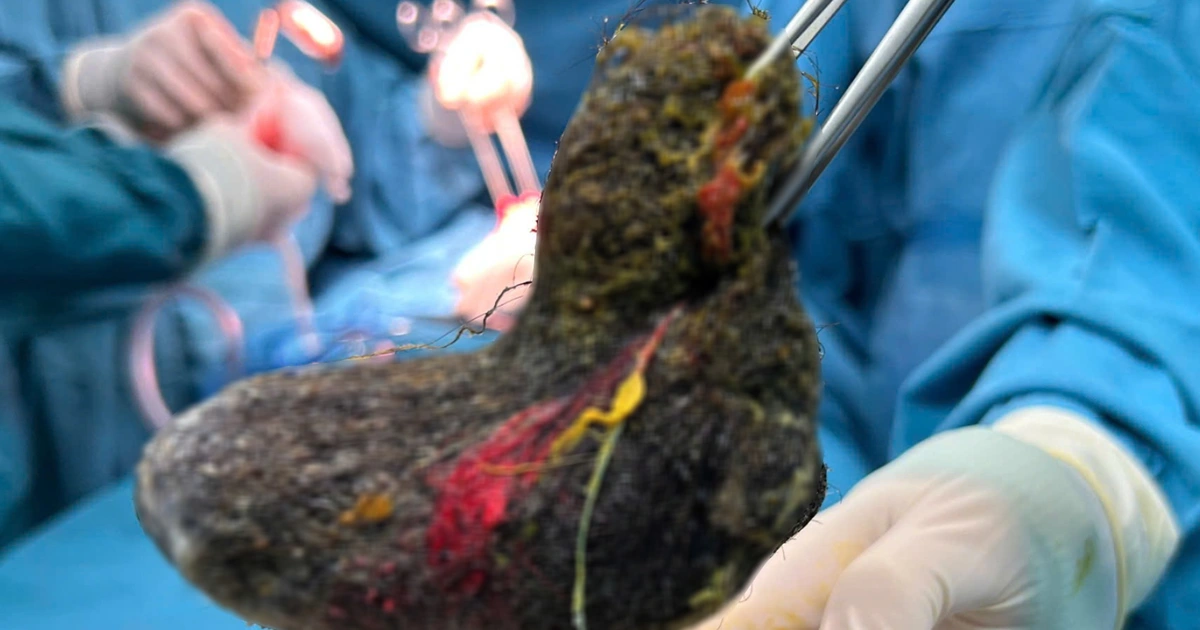
Hairball Fills 7-Year-Old Girl’s Stomach: A Hidden Danger Parents Must Not Ignore
The discovery of a massive hairball inside the stomach of a 7-year-old girl has shocked both the medical community and parents everywhere. What initially appeared to be a simple case of stomach discomfort quickly turned into a serious health emergency when doctors found that her stomach was nearly filled with a dense mass of hair. Although this condition is considered rare, it reveals a hidden danger that many families may overlook—behavioral disorders in children that quietly develop into physical health risks.
At first, the young girl only showed mild symptoms, including occasional stomach pain and a decrease in appetite. However, over time, her condition worsened significantly. She began to vomit frequently, lost weight, and became visibly weaker. Concerned about her health, her family brought her to the hospital, where detailed examinations eventually uncovered the true cause: a large hairball occupying most of her stomach.
Understanding the Condition Behind the Hairball
What happened to this child is medically known as a trichobezoar, a condition where hair accumulates in the stomach and forms a solid mass. This is closely linked to a behavioral disorder called trichophagia, in which a person compulsively eats hair. Because hair cannot be digested, it remains in the stomach and gradually builds up over time, combining with food and mucus to form a compact structure.
In many cases, this behavior is associated with trichotillomania, a psychological condition that causes individuals to pull out their own hair. For children, these actions are not simply habits but often responses to stress, anxiety, or emotional difficulties. The behavior may go unnoticed for a long time, especially if the child hides it or if adults assume it is harmless.
How the Condition Develops Over Time
The formation of a hairball in the stomach does not happen overnight. It is a slow process that can take weeks or even months. Each time hair is swallowed, it adds to the existing mass. Because the digestive system cannot break it down, the hair accumulates and becomes entangled, forming a dense and often large structure.
As the hairball grows, it begins to interfere with normal digestion. Food may no longer pass through the stomach properly, leading to discomfort and nutritional issues. In severe cases, the mass can extend beyond the stomach into the intestines, creating even more serious complications. This gradual development is what makes the condition particularly dangerous, as symptoms may not become severe until the situation is already critical.
Warning Signs Parents Should Not Ignore
One of the biggest challenges with this condition is recognizing it early. The signs are often subtle and can easily be mistaken for common childhood issues. However, there are certain behaviors and symptoms that should raise concern.
Children may frequently play with or pull their hair, chew on it, or even swallow it without realizing the consequences. Physically, they may complain of ongoing stomach pain, feel nauseous, or lose interest in eating. Weight loss, fatigue, and repeated vomiting are also warning signs that something more serious may be happening.
Because these symptoms can overlap with other conditions, it is important for parents to pay attention to patterns rather than isolated incidents. Consistent or worsening symptoms should always be evaluated by a medical professional.
Health Risks and Potential Complications
As the hairball increases in size, it can cause significant damage to the digestive system. The most immediate risk is blockage, where food and liquids can no longer move freely through the stomach. This can lead to severe pain and ongoing vomiting.
Over time, the constant pressure and irritation from the hairball may cause ulcers or internal bleeding. In extreme cases, the stomach wall can become perforated, allowing contents to leak into the abdominal cavity. This is a life-threatening situation that requires emergency medical intervention.
The longer the condition goes untreated, the higher the risk of serious complications. This is why early detection and timely treatment are so important.
Diagnosis and Medical Treatment
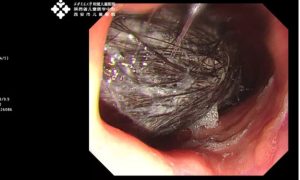
Diagnosing a trichobezoar typically involves imaging techniques such as ultrasound or CT scans, which help doctors identify unusual masses in the stomach. In some cases, an endoscopy is performed, allowing doctors to directly observe the hairball using a small camera inserted into the digestive tract.
Treatment depends on the size of the mass. Smaller hairballs may sometimes be removed using non-surgical methods, but larger ones usually require surgery. In the case of the 7-year-old girl, surgical removal was necessary due to the size and severity of the condition.
While surgery can successfully eliminate the physical problem, it does not address the underlying cause. Without proper follow-up care, there is a risk that the behavior may continue and the condition could recur.
The Psychological Aspect: Addressing the Root Cause
An essential part of recovery is understanding why the behavior occurred in the first place. Children who develop trichophagia or trichotillomania are often dealing with emotional or psychological challenges that they may not be able to express openly.
Therapy plays a key role in helping the child develop healthier coping mechanisms. Cognitive behavioral therapy is commonly used to identify triggers and replace harmful behaviors with safer alternatives. Family support is equally important, as a nurturing and understanding environment can significantly improve the child’s emotional well-being.
It is crucial for parents to approach the situation with empathy rather than punishment. Criticism or pressure can increase anxiety and make the behavior worse, while support and guidance can help the child recover more effectively.
Prevention: What Parents Can Do
Preventing such cases begins with awareness. Parents should take note of any unusual habits, especially those involving hair pulling or chewing. Maintaining open communication with children can help them feel comfortable sharing their feelings and struggles.
Creating a low-stress environment at home, encouraging healthy emotional expression, and seeking professional help when needed are all important steps in prevention. Early intervention can stop the behavior before it leads to serious medical complications.
It is also important for parents to educate themselves about behavioral disorders and understand that these conditions are not simply phases that children will outgrow without support.
Conclusion: A Wake-Up Call for Awareness and Care
The case of a 7-year-old girl with a hairball filling her stomach is more than just a rare medical ঘটনা; it is a powerful reminder of how closely physical and mental health are connected. What begins as a small, seemingly harmless behavior can develop into a life-threatening condition if left unnoticed.
This story serves as a wake-up call for parents and caregivers to pay closer attention to the emotional and behavioral well-being of children. By recognizing the signs early, seeking appropriate help, and providing a supportive environment, it is possible to prevent such dangerous situations from occurring.
Ultimately, protecting a child’s health means looking beyond visible symptoms and understanding the deeper issues that may be affecting them. Awareness, compassion, and timely action can make all the difference in ensuring a safe and healthy future for every child.

Bài viết liên quan

Businesses to Self-Print Electronic Stamps for Alcohol and Tobacco from 2027: A Transformational Policy Shift in Vietnam

USD/VND Exchange Rate Today (May 3): Diverging Trends Between Official and Black Markets