
US Nail Industry Under Pressure: How Stricter Labor Laws Are Reshaping Vietnamese-Owned Nail Salons
US nail industry labor laws are becoming stricter, creating major changes for Vietnamese-owned nail salons across America. From worker classification to rising business costs, these new regulations are reshaping how the nail industry operates in the United States.
The nail industry in the United States has long been a symbol of immigrant success, particularly for Vietnamese Americans. For decades, nail salons have provided a pathway to financial stability, entrepreneurship, and community building. However, recent changes in labor laws—especially in states like California—are dramatically reshaping the landscape.
Stricter labor regulations, increased inspections, and evolving worker classification rules are forcing nail salon owners and technicians to rethink how they operate. While these changes aim to protect workers and ensure fair labor practices, they also introduce new challenges that could redefine the future of the industry.
This article explores how tightening labor laws are impacting the US nail industry, with a particular focus on Vietnamese-owned salons, and what it means for workers, business owners, and the broader economy.
The Backbone of the US Nail Industry: Vietnamese Americans
The dominance of Vietnamese Americans in the nail industry is well documented. Since the 1970s, Vietnamese immigrants have built a strong presence in this sector, turning it into a thriving ecosystem of small businesses across the country.
Today:
- A significant portion of nail salons in the US are owned or operated by Vietnamese Americans
- Many technicians are first- or second-generation immigrants
- The industry provides accessible entry for those with limited English proficiency
This success story, however, has also made the industry more visible to regulators. As labor laws evolve, Vietnamese-owned salons find themselves at the center of policy changes.
Understanding the AB5 law California and Worker Classification
One of the most impactful legal changes affecting the nail industry is the implementation of the AB5 law California. This law was designed to address the misclassification of workers as independent contractors.
What Does AB5 Do?
AB5 introduces stricter criteria for determining whether a worker can be classified as an independent contractor. Under this law, many nail technicians—previously treated as self-employed—must now be classified as employees.
Why It Matters
For years, the nail industry relied on a flexible model:
- Technicians worked on commission
- They managed their own schedules
- Payments were often split between worker and salon owner
With AB5, this model is being replaced by a more structured employment system.
Rising Costs for Nail Salon Owners
Key Financial Pressures
Salon owners are now required to:
- Pay minimum wage
- Contribute to payroll taxes
- Provide workers’ compensation insurance
- Maintain proper employment records
These added expenses significantly reduce profit margins, especially for small businesses already operating on tight budgets.
Business Consequences
As a result:
- Some salons are reducing staff
- Others are increasing service prices
- In extreme cases, businesses are shutting down
The shift from a commission-based model to a payroll system is not just a legal change—it’s a fundamental transformation of how nail salons operate.
Reduced Flexibility for Nail Technicians
While labor laws aim to protect workers, they also come with trade-offs.
Before the Changes
Technicians enjoyed:
- Flexible schedules
- Commission-based earnings
- Direct access to tips
- The ability to work across multiple salons

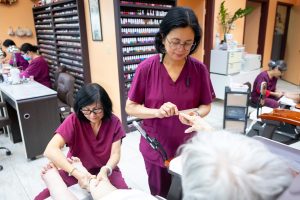
Nail salon workers adapting to stricter US nail industry labor laws and changing work conditions

After the Changes
Under stricter regulations:
- Workers may have fixed schedules
- Income may become more predictable but capped
- Employers may control client assignments
For many technicians, especially those who thrived under the old system, this shift represents a loss of independence.
Increased Inspections and Compliance Requirements
Government agencies are stepping up enforcement efforts across the nail industry.
Who Is Involved?
Agencies such as the Internal Revenue Service (IRS) and state labor departments are actively monitoring compliance.
What They Check
- Worker classification
- Payroll records
- Tax filings
- Business licenses
Potential Penalties
Non-compliance can result in:
- Heavy fines
- Legal action
- Business closure
This heightened scrutiny has made compliance a top priority for salon owners.
Why the Nail Industry Is Under Scrutiny
The nail industry has become a focal point for regulators for several reasons:
1. High Use of Immigrant Labor
Many workers are immigrants who may be unfamiliar with complex labor laws.
2. Cash-Based Transactions
Historically, some salons have relied on cash payments, making it harder to track income and taxes.
3. Small Business Structure
Most nail salons are independently owned, lacking the resources of large corporations to manage compliance.
These factors combined have drawn attention from policymakers aiming to enforce fair labor standards.
The Health and Safety Dimension
Beyond labor laws, there is growing concern about workplace health and safety in nail salons.
Technicians are frequently exposed to:
- Chemical fumes
- Dust particles
- Prolonged sitting or repetitive motions
Stricter regulations may also include:
- Improved ventilation requirements
- Safer product standards
- Worker protection guidelines
While these changes increase costs, they also contribute to a safer working environment.
Adaptation Strategies for Salon Owners
Despite the challenges, many salon owners are finding ways to adapt.
Modernizing Business Practices
- Implementing digital payroll systems
- Keeping accurate financial records
- Hiring legal and accounting professionals
Improving Service Quality
- Offering premium services
- Enhancing customer experience
- Building strong client relationships
Training and Certification
- Ensuring technicians are properly licensed
- Investing in skill development
These strategies not only ensure compliance but also position salons for long-term success.
Opportunities in a More Regulated Market
While stricter laws create obstacles, they also open new opportunities.
For Workers
- Greater job security
- Access to benefits
- Legal protections
For Business Owners
- A level playing field
- Increased consumer trust
- Opportunities for growth through professionalism
In many ways, the industry is moving from an informal economy to a more structured and sustainable model.
The Future of the US Nail Industry
The future of the nail industry will likely be defined by:
- Compliance with labor laws
- Adoption of new technologies
- Continued demand for beauty services
Although the transition may be difficult, the industry’s resilience should not be underestimated. Vietnamese entrepreneurs, in particular, have demonstrated remarkable adaptability over the years.
Conclusion: A New Era for Nail Salons in America
The tightening of labor laws marks a significant turning point for the US nail industry. What was once a flexible, informal business model is evolving into a regulated, professional sector.
For Vietnamese-owned nail salons, the stakes are especially high. The community that built this industry must now navigate complex legal requirements while preserving its entrepreneurial spirit.
In the end, success will depend on the ability to adapt. Those who embrace compliance, invest in quality, and operate transparently will not only survive—but thrive—in this new era of the American nail industry.

Bài viết liên quan

Businesses to Self-Print Electronic Stamps for Alcohol and Tobacco from 2027: A Transformational Policy Shift in Vietnam
USD/VND Exchange Rate Today (May 3): Diverging Trends Between Official and Black Markets